Posts Tagged ‘green’

What about the policies?

January 28th, 2010

The last few months have been instructive as we’ve seen both local Tory and Labour activists engage in negative, personal attacks on the Green candidate for Brighton Pavilion, Caroline Lucas.

Sadly this is nothing new, I was subject to personal attacks when campaigning to win the Regency by-election in 2007. In both cases the salient fact is that the other parties don’t seem able or willing to engage with Greens on issues of policy – which is what I suspect voters would rather see us debating.

The personal attacks seem to come out when they recognise the Greens as a serious threat to their electoral cartel. Back in 2007 we were best placed to win, and we did — hence it will be my honour and duty to attend this afternoon’s full council meeting.

Again in 2010 Greens are tipped to be in a position to win Brighton Pavilion at the General Election. I know Caroline Lucas will serve my constituents with energy and passion, as she has done for 10 years as our MEP.

To win voters over we’ll stay focussed on issues, policies and good old fashioned hard work. We’ll ignore the attacks – they’re a sign of policy weakness in my view – but we’ll rebut any falsehoods with vigour.

Organic flour has more minerals

January 24th, 2010

Continuing tonight’s health theme, I wanted to post about some interesting data I’ve come upon. I followed up some letters published in the Soil Association’s Living Earth magazine.

The letters continued the debate over the FSA’s controversial report claiming no significant health benefits from eating organic. I’m not a food scientist but the terms and methods of the FSA report seemed destined for a narrow result which could be easily misinterpreted by the media. Though the pretty categorical wording of the FSA’s release helped the media along:

“there are no important differences in the nutrition content, or any additional health benefits, of organic food when compared with conventionally produced food”

What’s odd is that we’ve known for a long time that the mineral content in conventionally farmed produce has been declining. We also know that minerals are vital for maintaining our health. For example this 1997 paper shows how only Phosphorous has escaped significant decline over the fifty years between 1930s and 1980s whilst water content in fruit has increased significantly.

With financial support from some Soil Association members Peter Symonds, a chemist, analysed a variety of flours for their mineral content. Wholemeal, organic UK-grown flours were found to have by far the highest mineral levels for Selenium and Zinc. I’ve copied below the full data and comments from the chemist.

How we grow our food is important not just for the environment around us (e.g. fertilisers polluting our rivers) but for our longterm health. Mineral deficiencies can have long term debilitating health consequences. Sadly the government agency supposed to be championing healthy food is not just ignoring this issue but actively creating the impression the problem isn’t there!

[Full Data]

SELENIUM AND ZINC IN ORGANIC AND CONVENTIONALLY GROWN FLOUR.
January 2010

Hans Lobstein of Brighton and Ian Bowyer of Chelwood Gate, East Sussex,  members of the Soil Association,  have funded an initial consumer survey of white and wholemeal flour for bread making which is sold in England. The  brands Stoneground organic and Marriages organic which were grown in the UK have the highest amount of selenium than conventionally grown.

BRAND AND TYPE                     ORGANIC                   SELENIUM                 ZINC

ug/100 grams        mg/100 grams

Marriages       strong  white               yes                         20.0                         —

Stoneground   strong  wholemeal       yes                         18.0                         —

Marriages       strong  wholemeal        yes                        17.6                         3.4

Marriges         strong  white                no                         15.6                         3.3

Allinsons         strong  wholemeal        no                         11.6                         2.8

Carr                strong  wholemeal        no                         10.2                         —

Dove               strong  wholemeal        yes                         4.2                          —

Hovis               strong  white               no                           3.6                          —

Hovis               strong  wholemeal        no                           3.2                          —

Tesco              soft      white                no                           2.2                         0.8

Morrisons        soft      wholemeal         no                           2.0                         2.6

Dove               soft      wholemeal        yes                          1.0                         2.7

Carr                strong  white                no                           1.0                          —

I have a sneaking suspicion that supermarket own brand Organic will be found to be like the Dove organic rather than the Marriages and Stoneground organic.  The Marriages wholemeal is £ 1.35 per 1.5 kilogram while the supermarket own brand is about £ 1.  I fear that people who think they can get organic at lower price in the supermarket are being short changed overall.

Peter Symonds  B.Sc. C.CHEM. M.R.S.C.

pmsymonds@yahoo.co.uk

http://sites.google.com/site/apexanalytical

[Earlier notes accompanying initial results]

1st December 2009

FOOD STANDARDS AGENCY REPORT COMPARING ORGANIC AND CONVENTIONALLY GROWN FOOD.

The Food Standards Agency has published a report that reviewed some published literature. The report concluded that organic food was not more nutritious than conventionally grown.  Hans Lobstein, a member of the Soil Association,  has funded an initial survey of wholemeal and white flour for breadmaking sold in England. The  brands Stoneground organic and Marriages organic which were grown in the UK have and higher amounts selenium and zinc than conventionally grown, see table.  The Dove flour is derived from wheat grown in Kazakhstan.

The full consumer survey would involve testing other premium brands such as Hovis and McDougal and supermarket own brand Organic flour.

The survey could be further extended to testing for all trace elements.  These can be measured reasonably cheaply using a modern analytical instrument, X Ray Fluorescence,  which measures all trace elements in one go.

A final effort would involve choosing 10 conventional farms and 10 organic farms (matched for wheat variety, soil and climate) and testing the wheat for selenium and trace elements.

300 grams of Stoneground flour per day provides about 56 ug of Selenium while other foods provide about 30 ug per day. Brazil nuts have approx 1560 ug per 100 grams so a few grams of nuts would bring the daily intake to the lower end of the recommended, 100 to 200 ug per day,  all without taking a supplement.  The figure for Brazil nuts has not been found from analysing nuts in health food shops but taken from The Composition of Food by McCance and Widdowson.  Of course,  Brazil is a big place and the composition of nuts may vary across the country.

Peter Symonds     pmsymonds@yahoo.co.uk

http://sites.google.com/site/apexanalytical

Is the apparent failure at Copenhagen really so bad?

December 19th, 2009

Following news of the Copenhagen summit has been a roller coaster filled with false alarms, misinformation, consternation and uncertainty. Like many people, I was hoping for a binding agreement to dramatically reduce emissions, keep temperature rises below 2 degrees and support for developing nations. But now I’m not sure that was ever truly a realistic outcome.

Yes, it sounds like arrangements for this massive summit could have been better. Perhaps more could have been done in the preparatory meetings. But how likely was it that we were going to get nearly 200 countries of enormous diversity, development and political direction to agree on strong binding action to cut greenhouse gas emissions? It’s certainly unfair to compare COP15 with the Montreal Protocol process which successfully dealt with ozone hole causing gases such as CFCs.

The production and use of CFCs were nowhere as central to mainstream ‘developed’ lifestyles as greenhouse gases now are. And the key narrative behind the need for global binding action is that reducing emissions will hurt economies. As a result nobody wants to make the first move for risk of crippling their economic competitiveness.

I think this view needs challenging. If a recession is the time for public spending (and it is) then ambitious projects for improved rail, renewable energy sources, energy efficiency upgrades and more are what we need. They keep people in jobs, improve quality of life whilst addressing our need to reduce emissions.

What they also do is put nations in a much better place to cope with ever increasing fuel costs as well as supply uncertainty. Because if the threat of violent climate change isn’t enough to galvanise action, certainly fuel shortages and spiraling prices will be — these are proven political hot buttons for rapid action. Oil is running out, it’s just a matter of when.

So while a decent agreement at Copenhagen would have been welcome, on reflection I don’t think it was ever that likely. We’re instead going to have to rely on self-interest to get the job done. Countries are going to run out of things to burn soon and the last ones ready with renewable energy sources are going to be the ones to experience the most cost and pain. Politicians take note — voters don’t like not being able to heat their homes, cook their dinner or travel around their countries.

UPDATE: Let’s not forget that despite the Kyoto protocol being ‘legally binding’ most countries are way off meeting their Kyoto obligations.

Energy ratings for electric heaters?

December 8th, 2009

There’s a room at the top of our house that gets really cold when the winds get blowing. It’s in a loft conversion, done by previous owners in around 2000. The good folks at Earthwise Construction checked it over and found minimal insulation in the dormer’s walls and roof. There is double glazing but not of a particularly high quality. Making all this good was going to be very expensive and the landlord wasn’t keen.

So I went shopping for an electric heater to help on those particularly cold days. What struck me was the absolute lack of clear labelling or information about the energy efficiency of these products. Looking online and in the usual DIY stores I found very different levels of information on each product. Many used Watts to refer to heat output, some also used Watts to refer to the electrical power usage of the device. Some did one or the other but didn’t specify if these were maximums or averages or something else. Others referred only to BTUs of heat output (that’s British Thermal Units) but not power usage.

Based on my A-level physics level of knowledge I wasn’t able to make easy energy efficiency comparisons between many of the choices. If there is a standard out there which I haven’t unearthed with my Googling, it’s certainly not apparent to the consumer.

Our older housing stock is going to be with us for a long time to come, regardless of whether any Green New Deal of sorts gets implemented. So people are going to need ‘top up’ heating in some rooms at least on colder days. Why not help them make the most efficient choices so they get the most heat per pound spent on electricity? We need a simple clear energy rating system for electric heaters – just like we see for other electrical goods these days.

A similar point is being made about car emissions and fuel efficiency by We Are FutureProof in this video:

Green response to Waste & Minerals Core Strategy

December 2nd, 2009

Today I submitted the Green Group of Councillor’s response to East Sussex and Brighton & Hove’s Waste & Minerals Core Strategy – Preferred Options consultation. In essence this consultation is a request for input on what the officers’ preferred strategies for handling waste and minerals in the area should be.

This strategy is highly dependent on Brighton & Hove’s own Municipal Waste Strategy which was also recently consulted on. It’s still in draft form, we don’t know what the City’s final strategy will look like. This summer we submitted our views on that strategy too.

In my view both of the drafts are deeply lacking in ambition. We could be making serious financial savings as well as reaping major environmental benefits, by a far more aggressive approach to waste. Simple things like garden green waste collections would shift up to 10% of municipal waste into the recycling column.

The Government are slowly beginning to get tougher on waste too… better late than never. They will be offering funds for ‘Zero Waste Areas’ as well as planning to ban certain materials from landfill altogether. We should be jumping onto that – we should have done years ago – again, better late than never!

The Green Group Waste & Minerals response [PDF]

Aiming for Zero Waste: Green Group response to the Municipal Waste Strategy [PDF]

You can view the Waste & Minerals Core Strategy either on the East Sussex Consultation Portal or in there Brighton & Hove Cabinet meeting papers [PDF]. The City’s draft Municipal Waste Strategy can be viewed here.

UPDATE: We didn’t address the issue of land raise specifically in the response, but I want to make clear that we do oppose the proposed introduction of land raise sites for waste disposal — especially in sensitive parts of our countryside as implied by the report.

Brighton Primark Protest

November 21st, 2009

This morning I had an early start to get out to Crown Street in Regency ward. I was joining residents who live around the large Brighton Primark on Western Road. For nearly two years their life has been blighted by deliveries through their small residential cul-de-sacs. Whilst most other businesses on Western Road take deliveries through loading bays at the front of their stores, Primark insist on using these side roads causing noise, vibrations and congestion.

Primark’s management have refused to enter into dialogue with residents or councillors. We’d had enough so decided to blockade their 8am Saturday morning product delivery. We hope to raise the profile of these issues ahead of a planning application from Primark being decided by the council’s planning committee this Wednesday 25th November, which includes delivery issues. We’re asking for a condition forcing Primark to take deliveries from the front like everyone else. Please lobby your councillors using WriteToThem.

See how our protest went:

A short report from BBC South East:

Update:
Some pictures of the protest by local resident Jane Dallaway are now on Flickr.

Dealing with green waste: Brighton & Hove vs the world

October 22nd, 2009

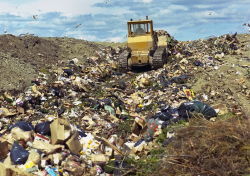
bulldozer_in_landfillI’m asking you to support a council-run green waste collection in Brighton & Hove with a pledge.

As some have noticed from my blogs and press work, I’m passionate about waste and recycling. I want to see Brighton & Hove at the forefront of best practice, aiming for zero waste. Unfortunately at the moment this is not the case, the city’s draft waste strategy has us planning to come in under the national targets for recycling and composting.

The first small step in trying to turn that around is arguing for a green waste collection in our city. This is something many people have called for, including the Older People’s Council, who rightly argue that many don’t have space to home compost, don’t have a car to drive waste to a collection point and can’t afford private pick-ups on a regular basis.

Based on what other councils provide, I expect we can provide a collection for a fee of around £50 a year. This would mean only those needing the service pay, it wouldn’t be supported by council tax, thus ensuring those without gardens aren’t paying for a service they can’t use.

To help convince the powers that be that this can be done I’m calling on everyone who’d like to use this service to pledge that they will sign up if we get the collections launched. Please signup at pledgebank.com/greenwaste and spread the word. Pledgebank wouldn’t let me specify the full area covered by the city, but if you live in Portslade, Hove, Brighton, Kemptown or Rottingdean then you can sign up.

To provide some context on what’s happening elsewhere and add to the pressure on the Council administration, here are some links:

Climate Change: It’s happening…

October 15th, 2009

Share photos on twitter with Twitpic

Today is Blog Action Day 2009 and the theme is Climate Change. An easy one for me to support!

If you’re still in doubt then take a look at Google Earth’s climate change page (with intro narrated by the one and only Al Gore). Zac Goldsmith made an excellent point on Newsnight last night… that people are desperate for political leadership on this issue. I agree, but don’t think Cameron is the man to do it! Greenpeace made a similar point with their marvellous “Change the Politics, Save the Climate” action on Parliament.

Ways to take action:

“Waste: Uncovering the Global Food Scandal” by Tristram Stuart: A review

September 10th, 2009

It was through waste and recycling that I first became a ‘green’. At my junior school I remember putting posters up encouraging my fellow pupils to recycle more cans, paper and cardboard.

What we consider ‘waste’ is deeply telling on our attitudes to food, the environment and consumption. As any archeologist can attest, waste reveals huge amounts about a society.

That ‘western’ lifestyles are wasteful probably will come as no surprise to most of Tristram Stuart’s readers. But the scale of the problem and its full ramifications are not quite so easy to grasp. Through a considerable amount of travel, some serious number crunching and lots of dumpster diving Stuart paints the full, shameful picture of our food waste problem.

Reading Stuart’s book is deeply exasperating in many places, through no fault of the author. It’s just frustrating to see so many obvious solutions to many of the problems Stuart examines. That companies allow themselves to waste huge amounts of valuable resources is not only unethical but bad business. That so many governments have failed to adequately tackle waste is plain irresponsible. Food waste means less food for the hungry and an environmental cost paid to grow/raise food which is never consumed.

Rather than rehearse the whole book, which is excellent, I urge you to read it. The calculations on the true costs of food waste are eye-popping as are the estimates that roughly half of all food produced is wasted between plough and plate. It’s an engaging and deeply worthwhile book. Thank you Tristram.

Buy from Amazon: Waste: Uncovering the Global Food Scandal
(I get a small referral if you use this link)

Norwegian Greens: Excluded from public TV

August 31st, 2009

From Jarle Fagerheim:

Dear Green friends,

We’re having a general election in Norway on September 14, and the Green
party is doing better than ever. Our membership has more than tripled
since last time (2005), the number of visitors to our website is
skyrocketing, and a marvellous team of 8 people are now working
round-the-clock at the Oslo office (last year at this time, it was me
alone!)

The last major hurdle to a Green breakthrough is getting coverage on
national television. The National Broadcasting Corporation has decided
to exclude us completely, there is no such thing as “party political
broadcasts”, paid TV adverts are prohibited by law. Our Minister of
Church and Culture Affairs, Trond Giske, earlier this year promised that
even the non-parliamentary parties were to be given a minimum of
coverage on public television during the campaign. Well, the campaign is
now in its final stages, and nothing is happening.

So I kindly ask you to visit www.democracyinnorway.net and send a
message to Minister Giske urging him to take action. If we can
demonstrate a substantial amount of support from fellow Greens all over
the world, we might be able to get some very good media coverage during
these last three weeks of campaigning.

Please forward this as widely as possible!

Jarle Fagerheim
head of office
Green Party of Norway
www.mdg.no